From Zero to Remote Pro: How to Build a Successful Remote Career in 2026
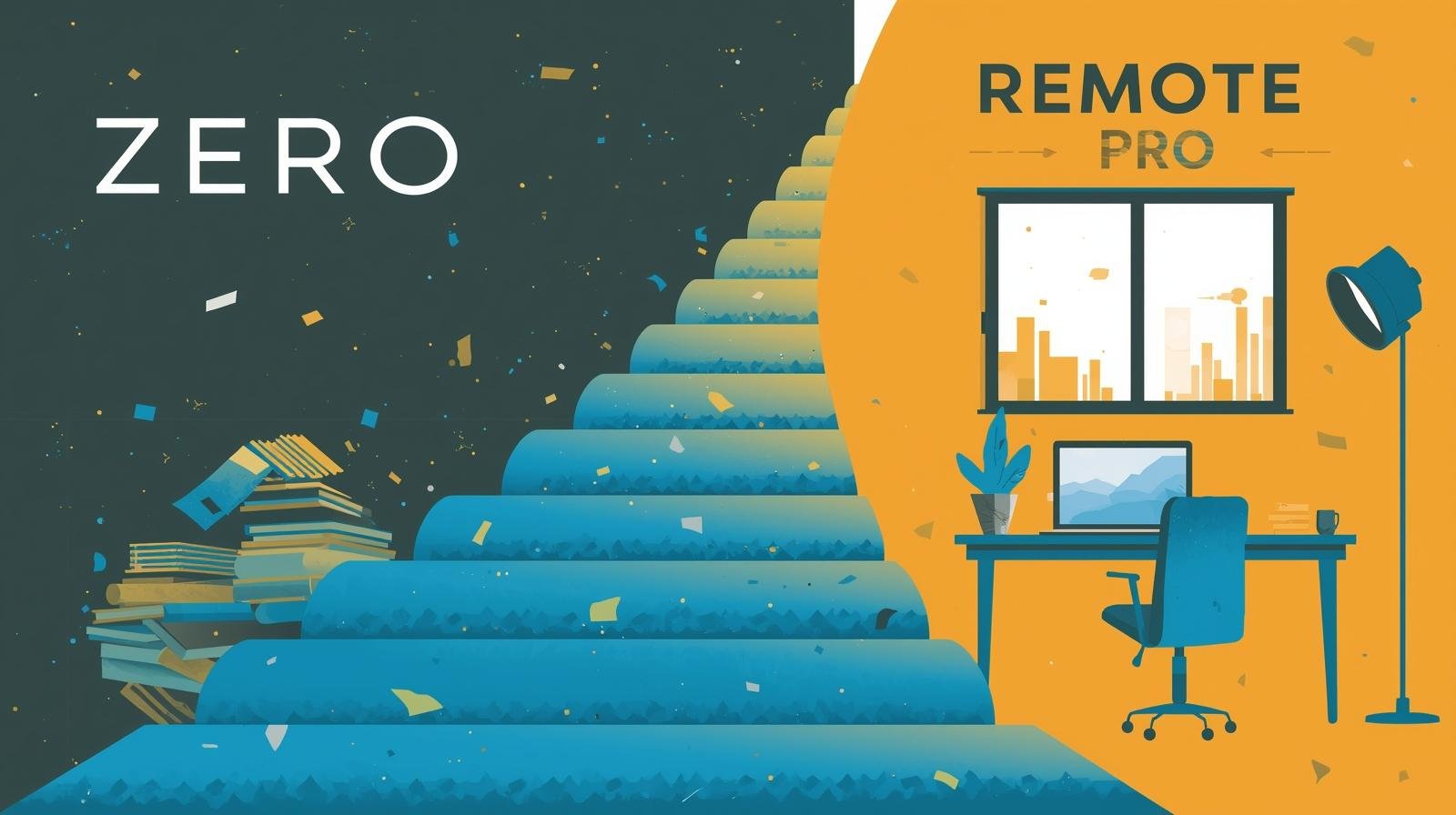
In 2025, employers refined how they hire, manage, and evaluate remote workers, and as a result, expectations are higher than ever. This means that 2026 will not be the year to experiment or “see how it goes.” It will be the year when only prepared candidates succeed. If you want to build a remote career in 2026, the work must begin now, while 2025 is closing. This guide is designed to help beginners and career switchers understand exactly how to move from zero experience to becoming a reliable remote professional in 2026, using practical steps that align with how companies actually hire today.
The State of Remote Work at the End of 2025
By the end of 2025, it has become clear that remote jobs are no longer easier than office jobs, they are simply different. Companies now hire remotely by default, but they are far more selective about who they trust to work without supervision. Employers expect remote workers to be self-managed, organized, and comfortable working across time zones using digital tools. Written communication, documentation, and task ownership have become core requirements, not optional skills. This shift means that people entering remote work in 2026 must be ready to operate like professionals from day one. The casual “learn while working” approach that was common in earlier years is disappearing, replaced by skill-based hiring and real-world assessments.
Why Preparing at the End of 2025 Matters for Your 2026 Remote Career
Many people wait until January to start planning their careers, but in the remote job market, timing matters. Entering 2026 unprepared puts you at a disadvantage, because companies will already be hiring candidates who spent late 2025 building skills, portfolios, and experience. Remote work is global, which means you are competing with people who may already have months or years of focused preparation behind them. Using the final weeks of 2025 to learn fundamentals, practice real tasks, and define your career direction gives you a head start. This preparation period allows you to enter 2026 with clarity, confidence, and practical ability instead of stress and uncertainty.
Choosing the Right Remote Career Path for 2026
One of the most important SEO-relevant mistakes beginners make is searching for “any remote job.” Remote work is not a single career, it includes many roles, each with different skill requirements. Popular remote careers in 2026 include software development, data analysis, digital marketing, SEO, technical writing, UX/UI design, customer success, and virtual assistance with specialization. Choosing the right path means looking at demand, learning difficulty, and long-term growth. Once you select a role, commit to it fully. This focus allows you to build depth instead of spreading your effort across unrelated skills, which is one of the fastest ways to stall progress in remote work.
Building Core Remote Skills Before 2026 Begins
Remote work success depends on two types of skills: role-specific skills and universal remote skills. Role-specific skills include the technical knowledge needed for your chosen career, such as programming, analytics, content strategy, or design tools. Universal remote skills include time management, written communication, task prioritization, and digital organization. As 2025 ends, your focus should be on mastering the basics of both. Strong fundamentals help you adapt to new tools and challenges, while weak fundamentals lead to confusion and burnout. Employers in 2026 will expect you to already understand these basics, so this preparation phase is critical.
How to Learn Remote Skills Effectively for 2026
Learning for remote work in 2026 requires a different approach than traditional education. Watching tutorials and reading articles is useful, but it is not enough. Real learning happens through application. This means building projects, solving problems, and practicing independently. If you are learning SEO, you should be working on real websites. If you are learning development, you should be building functional applications. If you are learning data analysis, you should be working with real datasets. Using AI tools to support your learning is encouraged in 2026, but they should assist your thinking, not replace it. Employers value people who can think critically, not just follow instructions.
Creating a Strong Remote Portfolio That Can Rank and Convert
A portfolio is one of the most important assets for landing a remote job in 2026. Employers rely on portfolios to evaluate your real ability, especially when hiring across borders. A strong portfolio explains what problem you worked on, how you approached it, what tools you used, and what result you achieved. It also shows your ability to communicate clearly, which is essential for remote work. As 2025 ends, you should audit your portfolio carefully. Remove weak projects, improve explanations, and make sure each project reflects your current skill level. A clean, focused portfolio builds trust and increases your chances of getting interviews.
SEO-Friendly Personal Branding for Remote Professionals
In 2026, your online presence plays a major role in your remote career. Recruiters and hiring managers often search your name, review your LinkedIn profile, and look at your portfolio before contacting you. Optimizing your personal brand means being clear about what you do, what problems you solve, and what tools you use. Avoid vague titles like “Aspiring Remote Worker.” Instead, use specific role-based keywords that align with your target job. This clarity improves both human trust and search visibility, making it easier for opportunities to find you.
Finding Legitimate Remote Jobs in 2026
Remote job scams continue to increase, making it more important than ever to apply strategically. In 2026, the best remote opportunities will come from reputable job boards, company career pages, professional communities, and referrals. Applying randomly to hundreds of jobs rarely works. Instead, focus on roles that match your skills and tailor your applications carefully. Employers want to see that you understand their business and can contribute remotely without constant guidance. Quality applications outperform quantity every time.
How Remote Hiring Will Work in 2026
Remote hiring in 2026 will rely heavily on practical tests and trial tasks. Companies want to see how you work, not just hear how you talk about work. These tasks are designed to test problem-solving, communication, and execution. Preparing for this means practicing how you approach tasks, explain your decisions, and deliver results within deadlines. The more familiar you are with this process before applying, the more confident and professional you will appear during hiring.
Developing the Right Mindset for a Long-Term Remote Career
Remote work requires a mindset shift. In 2026, remote professionals are expected to take ownership of their growth, performance, and improvement. There is less supervision, but more responsibility. This independence can be challenging at first, but it is also what makes remote work rewarding. People who succeed remotely are those who consistently improve their skills, communicate clearly, and take their work seriously. Developing this mindset before 2026 begins will help you transition smoothly into professional remote roles.
Conclusion: End 2025 With Preparation, Start 2026 With Action
As 2025 comes to a close, the opportunity to build a remote career in 2026 is still wide open, but it requires intention and preparation. Remote work is no longer about location freedom alone; it is about delivering value consistently from anywhere in the world. By using the end of 2025 to choose a clear path, build strong fundamentals, practice real skills, and prepare your portfolio, you position yourself for success in 2026. Remote careers are built step by step, and the best time to start preparing for the future is before the year changes.
